
Every October 10, World Mental Health Day asks us a simple question: whose voice are we hearing, and whose are we missing? For the estimated 50,000 to 70,000 children living and working on the streets of Metro Manila, the answer is too often the second one.
These children face hunger, danger, and loss that would overwhelm most adults. Yet mental health support rarely reaches them, and unhealed pain can follow a child for years.
The good news is that healing is possible, and it starts with trauma-informed psychosocial support. In this blog, we’ll walk you through this year’s theme, the Philippine laws behind it, what trauma-informed care really means, and simple ways you can take part, whether you give an hour, a conversation, or a donation.
Why World Mental Health Day Is Important to Celebrate
World Mental Health Day happens every 10th of October. The World Federation for Mental Health (WFMH) started it in 1992, and the World Health Organization (WHO) supports it. Its goal is straightforward: raise awareness, reduce stigma, and rally people behind better mental health care.
Here’s why that matters. Mental health shapes how a child learns, builds friendships, and imagines the future. When we treat it as optional, the children with the fewest protections pay the highest price. Our post on why mental health matters goes deeper on this.
The numbers back it up. A nationwide study in Global Mental Health found that moderate to severe depressive symptoms among Filipino youth aged 15 to 24 more than doubled, from 9.6% in 2013 to 20.9% in 2021.
The 2026 Theme: “Lived Experiences Heard: Real Voices, Real Change”
WFMH announced this year’s theme on August 11, 2026. It encourages organizations to hold events that put people with lived experience at the center, while backing WHO’s push for deinstitutionalization, which means moving toward community-based care.
What does that look like for children in street situations? It means listening before we fix. These children know what feels safe, what helps, and what doesn’t. Real change begins when adults ask, wait, and then act on the answers.
National Mental Health Week and RA 11036: The Philippine Context
The Philippines doesn’t observe this day alone. Proclamation No. 452, signed in 1994, set the second week of October as National Mental Health Week under the Philippine Mental Health Association. The exact dates shift each year, so check announcements from the Department of Health or the association.
Real legislation sits behind that week:
- RA 11036, the Mental Health Act of 2018, affirms every person’s right to mental health and calls for timely, affordable, and culturally appropriate care. It also aims to bring services down to the barangay level.
- RA 12080, the Basic Education Mental Health and Well-Being Promotion Act, signed in December 2024, mandates school-based mental health programs.
Laws are a strong start, but gaps remain. The Philippine Psychiatric Association reports only 651 psychiatrists, 516 psychiatric nurses, and 133 psychologists in the country. And school-based programs can’t reach children who aren’t in school. That’s where community organizations step in.
What Is Trauma-Informed Psychosocial Support?
Let’s break the term into two parts. Psychosocial support looks after a child’s emotional, social, and mental needs together. It can include counseling, group activities, peer connection, and support for parents. For more information, read our guide to psychosocial support and its role in building a better society.
Trauma-informed care changes the question from “What’s wrong with you?” to “What happened to you?” It assumes many children carry painful experiences, and it avoids anything that makes them relive the hurt.
The Core Principles in Plain Language
- Safety first: A child needs to feel physically and emotionally safe before anything else can work.
- Trust built over time: Consistent, reliable adults matter more than one great session.
- Choice and voice: Children decide what to share and when.
- Strengths over labels: We build on what a child can do, not only on what they’ve lost.
- Collaboration: Families, educators, and communities all play a part.
Why It Matters on the Streets
Children in street situations may witness violence, go hungry, or lose contact with family. A rushed intervention or a stranger’s tough questions can feel like one more threat. Trauma-informed support slows down, earns trust, and meets children where they are, quite literally.
How to Observe and Support World Mental Health Day
You don’t need a clinical background to help. Pick the level that fits your life.
For Individuals
- Check in on a friend, coworker, or relative, and really listen.
- Learn the warning signs: sudden mood changes, withdrawal, trouble sleeping, or hopeless statements.
- Challenge the idea that struggling is kahinaan (weakness). Our words shape whether people ask for help.
For Schools and Families
- Start a short conversation about feelings at home or in class.
- Ask children what helps them feel calm and safe, which echoes this year’s theme.
- Explore our post on Children’s Mental Health Awareness Day for warning signs and ways to advocate.
For Workplaces and Community Groups
- Host a listening circle or wellness session during National Mental Health Week.
- Run a donation drive for children in street situations.
- Sign up your team for a Childhope outreach through our volunteer program.
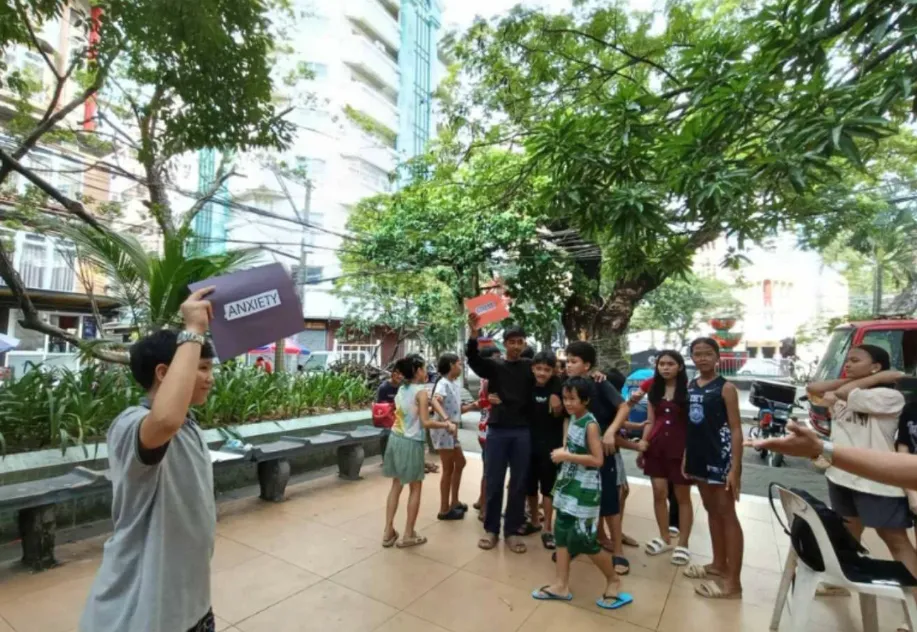
How Childhope Philippines Prioritizes the Mental Wellbeing of Children in Street Situations
At Childhope, mental wellbeing isn’t an add-on. It runs through our flagship Street Education and Protection (STEP) Program, guided by our Caring-Healing-Teaching framework. Here’s what that looks like day to day.
Counseling That Meets Children Where They Are
Our trained street educators and social workers offer individual and group counseling for children and their parents, helping them cope with the stress and trauma of street life. We also assist shelters that serve neglected and abandoned children, so emotional support stays consistent.
KalyEskwela: A Safe Space on the Streets
KalyEskwela, our “school on the streets,” brings learning to where children are. It gives them routine, belonging, and a steady adult presence. Our KalyEskwela Assistance Program goes further. As of 2024, nearly 100 children and youth received monthly allowances along with home and school visits, counseling sessions, and parent counseling.
KliniKalye: Care for Body and Mind
A child who is sick or hungry can’t focus on healing. KliniKalye, our mobile clinic, provides primary care, consultations, and treatment, and our health workers are trained to notice signs of stress, trauma, and neglect.
Skills That Build Confidence
Leadership, arts, sports, and computer literacy training give children a sense of identity and pride. Our post on youth development programs shows how this builds resilience for the long term.
Across all of it, the same ideas show up: safety, consistency, choice, and strengths. That is trauma-informed support in action.
Why You Need to Support Mental Health Campaigns in the Philippines
Awareness days are only the beginning. Without action, they stay as posts and hashtags. Here’s why your support makes a difference:
- It closes the gap. Laws and school programs can’t reach every child. Community organizations can.
- It keeps help consistent. Healing needs the same caring adults showing up again and again.
- It fights stigma. Every open conversation makes it easier for the next person to ask for help.
- It helps earlier. Early support leads to better long-term outcomes for children.
- It lifts lived experience. Children’s voices drive real change, just as this year’s theme says.
Your support can take many forms, and every one counts. You can volunteer, give, share, or simply start the conversation.
Give Light, Give Support, Give Hope
This World Mental Health Day, you can turn awareness into something a child will feel. You can give your time by joining an outreach and sharing your skills with children who need a steady, caring adult. Become a Childhope volunteer. Or you can give a gift that keeps counseling, KalyEskwela, and KliniKalye running. Donate today through GCash, Maya, BDO, or BPI.
Every child deserves to feel safe and heard. Help us make that real this World Mental Health Day and long after it.