
For the hundreds of children who spend their days navigating the busy intersections, markets, and sidewalks of Sta. Cruz and Quiapo in Manila, a classroom has never been a guarantee. But thanks to the renewed efforts of Childhope Philippines Foundation, Inc., education is once again coming to them — right where they are.
Childhope Philippines has officially relaunched its Street Education and Protection (STEP) Program in Sta. Cruz, Manila, with a formal expansion into Quiapo, Manila as a new service area. This milestone reaffirms the organization’s mission to reach the city’s most vulnerable children and youth — and its belief that no child should be left behind simply because of where they were born.
What Is the STEP Program of Childhope Philippines?
The Street Education and Protection (STEP) Program is the flagship program of Childhope Philippines Foundation, Inc., a non-governmental organization that has been advocating for Filipino street children since 1989. Rooted in the belief that education is a fundamental human right, STEP was built to bring quality, structured learning directly to children living in the urban poor communities of Metro Manila, where the path to a formal classroom is rarely straightforward.
Guided by a Caring-Healing-Teaching framework, the program operates on the understanding that a child cannot fully learn if they are hungry, unsafe, or emotionally distressed. It takes a holistic approach to child development — addressing not just academics, but also health, psychosocial well-being, and life skills. At present, it covers multiple areas across Manila, Caloocan, and Parañaque, reaching approximately 1,000 to 1,200 street children every year. Learn more about Childhope’s One Mission for 2026 and how this program fits into the organization’s broader vision for Filipino street children.
How the STEP Program Creates a Difference in the Lives of Street Children
The STEP Program is not a single service. It is a complete ecosystem of care designed around each child’s total well-being. Every component addresses a specific barrier that keeps street children from learning, growing, and thriving. Together, they form a support structure that meets children where they are, in every sense of the phrase.
Understanding the causes of the lack of education in the Philippines makes it clear why a multi-layered program like STEP is necessary. Poverty, family instability, and the absence of a safe learning environment all play a role, and each pillar of the STEP Program is designed to directly respond to one of these realities.
KalyEskwela: A Classroom That Comes to the Child
At the heart of the STEP Program is KalyEskwela, a Filipino term that literally means “school on the streets.” A mobile van equipped with audiovisual materials and learning tools travels directly to communities where street-connected children live and work. Under the Department of Education (DepEd)-accredited Alternative Learning System (ALS), children learn through structured modules guided by trained street educators, with a focus on building foundational literacy and numeracy skills that open doors to a better future.
Children who are ready to transition back into the formal school system are also provided with educational aid and continued support. This community-based approach to education ensures that no child is turned away simply because they are not yet enrolled in a traditional school.
Youth Empowerment Project: Skills That Sustain a Future
For older youth participants, the STEP Program runs trade and technical skills training under the Youth Empowerment Project. This component helps young people develop practical, income-generating capabilities, from livelihood skills to vocational training, equipping them to support themselves and contribute to their families.
This transition from learning to earning is crucial for youth who face the daily pressure of survival. By building a skills foundation during their formative years, the STEP Program gives older participants a concrete pathway out of the cycle of poverty and street dependency.
Psychosocial Support: Healing Before and While Learning
Life on the streets carries a heavy emotional weight. Through dedicated psychosocial support and counseling sessions for both children and their parents, the STEP Program helps participants process stress, heal from trauma, and develop a stronger sense of self. Explore more about how child development and counseling shape long-term outcomes for children in vulnerable settings.
These sessions are not a supplement to the program. They are central to it. A child who feels safe, seen, and emotionally supported is far more capable of learning and growing than one who is carrying unaddressed pain.
KliniKalye: Keeping Children Healthy Enough to Learn
Through KliniKalye, Childhope provides primary preventive medical care, consultations, and treatments directly to street children through a mobile health clinic. This component ensures that every child is healthy and physically capable of engaging in learning. It also includes hygiene education, reinforcing the importance of personal hygiene habits that protect children from preventable illness.
Because without good health, education cannot take root, and without education, the cycle of poverty continues.
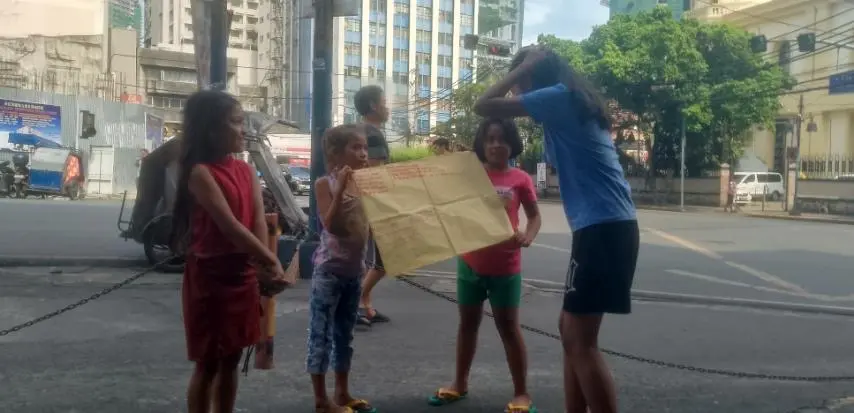
Why Childhope Chose Sta. Cruz and Quiapo for the STEP Program
Sta. Cruz and Quiapo are among the most densely populated and commercially active districts in the City of Manila. From the crowded market streets near Quiapo Church to the bustling thoroughfares of Sta. Cruz, these communities are home to a large number of urban poor families, many of whom depend on daily street-based work to survive, and whose children are highly visible on the streets throughout the day.
For these children, attending a traditional school is rarely a simple option. Social inequality, poverty, the pressure to contribute to family income, and the instability of street life create formidable barriers to formal education. Metro Manila alone is estimated to be home to between 50,000 to 70,000 children living and working on its streets, and nationally, millions of young Filipinos between the ages of 6 and 24 remain out of school.
A Process Built on Listening First
The revitalization of the STEP Program in these areas began with a systematic area exploration of Sta. Cruz, Manila. Childhope’s team conducted on-the-ground assessments to understand the local environment, mapping where children congregate, identifying the most pressing educational needs, and evaluating community conditions. Only after this deliberate groundwork was completed did the program formally expand to include Quiapo as an additional service area.
This assessment-first approach reflects Childhope’s broader organizational values: that meaningful impact begins not with assumptions, but with genuine listening to the communities being served.
Leadership That Made the Relaunch Possible
The official re-opening was achieved through the dedicated leadership of Sir Elton, Assistant Program Manager of Childhope Philippines, alongside a team of committed street educators. Together, they carefully reviewed program frameworks, learning strategies, and implementation plans, ensuring that the relaunched program would be equipped to meet institutional standards while remaining responsive to the unique realities of children in Sta. Cruz and Quiapo.The dedication of Childhope’s street educators has always been central to the program’s success. These are professionals who choose to show up on the streets every day, not because it is easy, but because they believe every child deserves to be seen and taught.
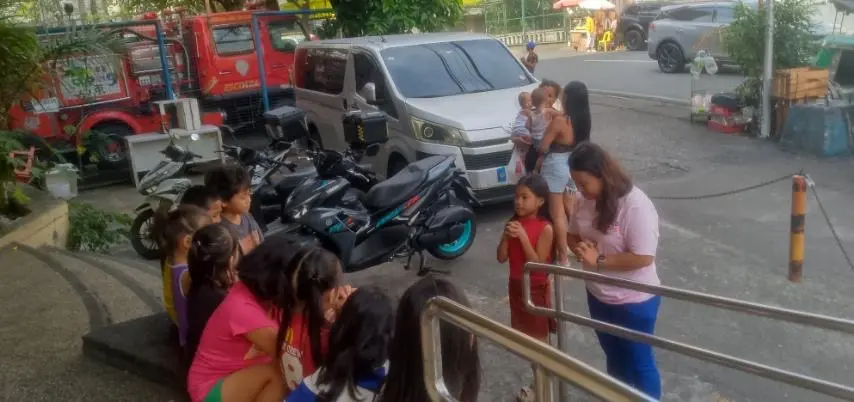
Be Part of Making a Difference
Every child in Sta. Cruz and Quiapo, who receives an education, a health check-up, or a safe space to be heard, does so because someone chose to show up for them. Childhope Philippines cannot do this work alone. Whether through a donation that funds a mobile learning session or through volunteering your time on an outreach, your support directly sustains the STEP Program and keeps it moving through the streets of Manila.
Be the hope these children are waiting for. Donate to Childhope Philippines today or join us as a volunteer and help us bring education, healing, and opportunity to every child who needs it, one street, one session, one life at a time.