
Picture a busy intersection in Manila at dusk. Jeepneys crawl, headlights flicker on, and a child weaves between cars with a handful of sampaguita garlands. Nobody invited this child to a Children’s Month program. Chances are, no one has noticed them at all. That child is not an exception. An estimated 50,000 to 70,000 children live and work on the streets of Metro Manila, and many of them stay invisible to the rest of us.
Every November, National Children’s Month puts children’s rights back in the spotlight. This year, we want to make sure that spotlight reaches every child. Below, we’ll explain what the observance means, why the 2026 theme matters, and how you can take part in a way that fits your time and budget.
What Is National Children’s Month?
National Children’s Month is the Philippines’ yearly November observance of children’s rights, welfare, and development. Schools, local governments, agencies, and organizations like ours hold activities all month, led by the Council for the Welfare of Children (CWC).
The 2026 Theme, Explained
The 2026 theme is “Manindigan! Tumugon at Kumalinga: Sa Batang Handa, Mas Ligtas ang Bansa.” In plain English: “Stand up, respond, and care: when children are prepared, the nation is safer.”
Each key word is a call to action:
- Manindigan: take a stand and speak up for children.
- Tumugon: respond fast when children are at risk.
- Kumalinga: care for and nurture them.
Themes shift every year. In 2025, the focus was ending online sexual abuse and exploitation of children. In 2026, the lens widens to emergencies, and for good reason. Typhoons, floods, earthquakes, and conflict regularly disrupt children’s access to essential services and raise the risk of abuse, neglect, and family separation, as the Commission on Human Rights points out.
Now think about a child with no home to evacuate from, no family emergency plan, and no adult checking in. “Being prepared” only works if it includes the children who are easiest to forget.
A Brief History of National Children’s Month
The timeline is short, with one twist.
- 1989: On November 20, the United Nations adopts the Convention on the Rights of the Child (UNCRC).
- Early 1990s: The Philippines begins observing a children’s month through presidential proclamations, originally in October.
- 2015: On May 29, President Benigno Aquino III signs Republic Act No. 10661, the National Children’s Month Act. It moves the observance to November to line up with the UNCRC anniversary.
- Today: The law directs lead agencies to prepare an annual program, asks schools nationwide to take part, and encourages local governments and private groups to join in.
Good to know: If you see the observance listed in October on other pages, that information is out of date. It was moved to November in 2015.
Why Should Filipinos Support This Celebration?
Fair question: does one more awareness month really change anything? It can, if we treat it as a starting line instead of a finish line.
Because Children’s Rights Need More Than One Month
Awareness is the spark. Protection is the daily work. Learn something in November, then keep acting in December, January, and beyond. Our street educators show up all year, not only when the banners are up.
Because Hidden Hardships Pile Up
Children in street situations rarely face just one problem. Hunger, unsafe work, missed schooling, and constant stress tend to arrive together. See how they connect in our posts on severe food poverty and child labor, and understand how the emotional toll is just as real.
Because Safer Communities Start With Ordinary People
Child protection isn’t only for social workers and officials. Neighbors, teachers, tricycle drivers, and shop owners are often the first adults a child meets. When more of us notice and care, children are safer. That’s what “Mas Ligtas ang Bansa” looks like in everyday life.
How to Take Part and Create a Difference for Children
There’s no single right way to join in. Here are six ways Filipinos can take part, from learning at home to supporting children through an organization.
1. Learning Where to Start
The CWC’s National Children’s Month page is the best official source for this year’s theme and activities. Aside from that, we go deeper into the daily realities of street children, and our piece on safe spaces for street children is a helpful first read.
2. Preparing Your Family
This year’s theme begins at home. Families that talk through what happens in a typhoon or flood are better prepared when it counts. A known meeting place, key contacts, and important documents kept in one grab-and-go bag all help. Children who know the plan often feel calmer, too.
3. Why Your Voice Matters
Awareness grows when people talk about it. A post with #igivehope, a conversation at school, or a question to your barangay about its National Children’s Month plans all keep children’s issues visible. One question worth raising is whether those plans include children in street situations, who are easily left off the guest list.
4. How Volunteering Works
Volunteers help us reach more children, more often. Our volunteer page explains how people can join, and our mailing list shares where and when the next outreach will happen. It’s a simple way to see what showing up for these children looks like.
5. Where Giving Fits In
Donations keep our programs running day to day. Supporters can give through GCash, Maya, BPI, BDO, or online on our donation page, either once or monthly. Monthly gifts are especially valuable because steady support lets us plan ahead for the children we serve.
6. What Workplaces and Communities Can Do
Groups can multiply the impact of individual effort. Companies, schools, and community organizations can organize donation drives, invite our team to speak at an event, or explore a longer partnership.
How Childhope Philippines Advocacies Support Children in the Philippines
Everything we do falls under the Street Education and Protection (STEP) Program. It is built on a Caring-Healing-Teaching framework that puts each child’s best interest first. Here’s how that looks on the ground.
Education: KalyEskwela
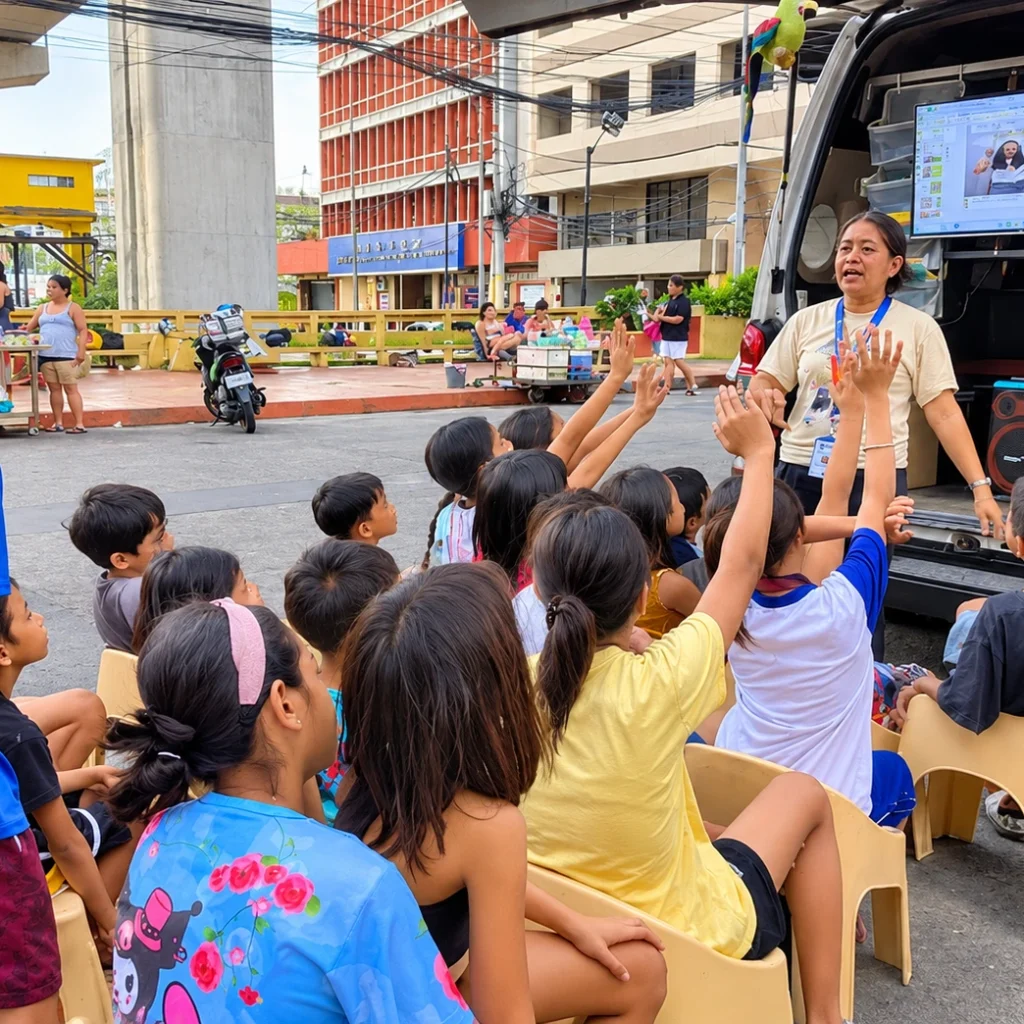
KalyEskwela means “school on the streets.” A mobile van with audiovisual equipment brings literacy and numeracy classes to children where they are, through the DepEd-accredited Alternative Learning System. We also support children who return to formal school.
Health: KliniKalye
Our mobile health clinic offers preventive care, consultations, and treatment, so children are healthy enough to learn and play.
Psychosocial Support
We provide counseling for children and their parents, and we assist shelters caring for neglected and abandoned children. For many kids, healing has to come first.
Skills Development
Children and youth build leadership, computer literacy, sports, and arts skills. Older participants can join trade and tech training through our Youth Empowerment Project, so they can earn and support their families.
Take Part, Give Hope
National Children’s Month ends on November 30, but the children we serve need us on December 1 too. If this story moved you, you can volunteer with us and meet the children your time helps, donate today to keep our classrooms, clinics, and counseling going, or follow us on Facebook and share our stories with someone who cares about children.
Every voice, every hour, and every peso moves a child closer to safety. This National Children’s Month, let’s make sure no child stays unseen. Stand up, respond, and care with us.